- Aug 24
Decision Fatigue: When Every Choice Feels Too Hard
- Lydia Dyhin
- Mental Health Awareness
- 0 comments

Caregiving involves decisions all day long.
What time is the appointment?
Did they take their medication?
Should I call the doctor?
What needs to be bought?
Can I leave them alone?
Who can help?
What happens next?
Many of these decisions may seem small on their own.
Together, they can become exhausting.
By the end of the day, even choosing what to cook, what to wear or whether to answer a message can feel like too much.
This is sometimes called decision fatigue. It doesn’t mean you’re becoming incapable.
It can simply mean your mind has been carrying too many decisions for too long.
Caregiving Uses a Lot of Mental Energy

Caregivers often make far more decisions than other people realise.
You may be managing:
appointments
medications
transport
finances
meals
household tasks
care arrangements
medical information
family communication
unexpected problems
You may also be constantly thinking ahead.
What if they fall?
What if the medication changes?
What if I can’t be there tomorrow?
Even when you’re not actively doing something, part of your mind may still be managing care.
That ongoing mental workload can make ordinary choices harder.
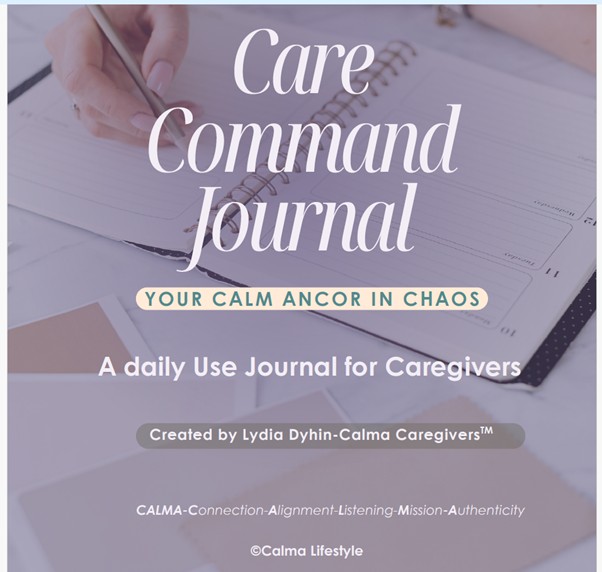
As part of my lived experience, I found the mental load is eased by having as much as possible in the one place so I created the Care Command Journal and I’m sharing it with you-it’s FREE and interactive so you can use it on the go, anywhere and anytime: here’s the link for the Download: https://www.calmacaregivers.com/care-command-journal
Why Small Decisions Can Suddenly Feel Huge
When your mental energy is already depleted, a simple question can feel strangely difficult.
What do you want for dinner?
You may genuinely not know.
You might stand in front of the fridge and feel unable to decide.
Or someone may ask:
What time suits you?
and even that feels like one more thing you have to work out.
Decision fatigue can lead to:
v putting decisions off
v choosing the easiest option
v becoming irritated by questions
v second-guessing yourself
v feeling overwhelmed by too many choices
v avoiding decisions altogether
This can be frustrating, especially if you’re normally organised and decisive.
But your mind may not need more effort.
It may need fewer decisions.
Simplify What Does Not Need to Be Complicated
Not every decision deserves the same amount of energy.
One useful approach is to simplify the predictable parts of your day.
For example:
Ø Have a few regular breakfasts.
Ø Rotate the same simple meals.
Ø Keep frequently used items in the same place.
Ø Choose set days for shopping or washing.
Ø Use the same pharmacy, supermarket or transport routine where possible.
Ø Small routines reduce the number of choices you need to make.
Ø They create space for the decisions that genuinely matter.
Practice: Create a Default
Choose one area of your day that repeatedly requires a decision.
It might be lunch, clothing, shopping, exercise, household tasks.
Now create a default.

For example:
Monday lunch is soup.
Tuesday is shopping day.
Morning appointments are always booked before 11 if possible.
I wear one of three comfortable outfits when caregiving.
A default does not mean you can never change your mind.
It simply removes the need to decide every time.
Limit the Number of Options
Too many choices can be tiring.
Instead of asking yourself:
What could we eat tonight?
try:
Soup or pasta?
Instead of:
When should I make this appointment?
try:
Morning or afternoon?
Narrowing the options reduces the mental load.
This can also help when you are making decisions with the person you care for.
Too many choices may be overwhelming for them too.
Separate Urgent From Important
Caregiving can make everything feel urgent. But not every decision needs to be made immediately.
Try placing decisions into three groups:
✓Needs a decision today
✓Can wait
✓Someone else can decide
This can be surprisingly freeing.
You may discover that some things don’t need your attention right now.
And some don’t need your attention at all.
Share Decisions, Not Just Tasks
Caregivers often ask others to help with practical jobs. But decision-making itself can also be shared.
You might say:
“Can you choose the meal plan for this week?”
“Can you organise the transport for the appointment?”
“Can you research these two care options and tell me what you recommend?”
“Can you take responsibility for ordering the prescriptions?”
This removes more than a task.
It removes the thinking attached to the task.
That can make a significant difference.
Stop Re-Deciding the Same Thing
One of the most draining patterns is making the same decision repeatedly.
If something works, consider turning it into a routine.
For example:
If a particular meal is easy, keep it in regular rotation.
If a certain appointment time works well, request it again.
If one family member handles a particular responsibility well, let that remain their responsibility.
Every repeated decision you can remove gives your mind a little more breathing room.
Practice: The Three-Choice Rule
When a decision feels overwhelming, limit yourself to three options. No more.
Ask:
What are the three realistic choices?
Then choose the one that’s good enough. Not perfect, good enough.
Caregivers can sometimes place enormous pressure on themselves to make the best possible decision every time.
Often, a reasonable decision is enough.
Give Yourself Permission to Delay
Some decisions don’t need an immediate answer.
You can say:
“I need to think about that.”
“I’ll decide tomorrow.”
“I can’t make that decision right now.”
A pause can prevent you from making choices simply because you’re mentally exhausted.
It can also reduce the feeling that everything needs to be solved immediately.
Protect Your Best Thinking Time
Notice when your mind feels clearest. For some people, it is early morning, for others, it may be after lunch or after a walk.
Where possible, make more important decisions during that time.
Try not to use your best mental energy on minor choices.
If you know evenings are difficult, avoid leaving complicated decisions until then.
Your energy changes throughout the day and you can work with that rather than against it.
A Quiet Reflection

Take a moment and ask yourself:
≈Which decisions am I making again and again?
≈What could become a routine?
≈What could someone else decide?
≈What decision can wait?
≈Where am I giving myself too many options?
≈What would “good enough” look like today?
You don’t need to become more efficient at making endless decisions.
Sometimes the answer is to make fewer of them.
Caregiving already asks your mind to hold a great deal.
Simplifying routines, reducing options and sharing responsibility can help create space for clearer thinking.
And when something as small as choosing dinner feels too hard, it may not be the dinner.
It may be the weight of everything you have already decided that day. Reducing that weight is not laziness.
It is a practical form of care for the caregiver too.
Here’s a reminder for the FREE Care Command Journal: https://www.calmacaregivers.com/care-command-journal